

NUEVAERA.COM

🌐 Otros idiomas / Other languages — Google Translate

El traductor requiere conexión a Internet y puede no estar disponible en todos los navegadores. / Translation requires Internet access and may not work in every browser.

Una elección consciente puede cambiar tu díaA conscious choice can change your day

¿UN MOMENTO DE ENOJO O UN MOMENTO DE GRATITUD?A MOMENT OF ANGER OR A MOMENT OF GRATITUDE?

Un mal momento puede durar segundos. Repetirlo en nuestra mente puede prolongar el estrés durante horas. Descubre cómo interrumpir ese ciclo y regresar a la paz.A difficult moment may last seconds. Replaying it in our minds can extend stress for hours. Discover how to interrupt the cycle and return to peace.

Cinco segundos de enojo frente a cinco segundos de gratitudFive seconds of anger versus five seconds of gratitude

Un incidente. Dos caminos.One incident. Two paths.

No siempre elegimos lo que sucede. Pero podemos aprender a elegir qué hacer con nuestros pensamientos, nuestras palabras y nuestras acciones.We cannot always choose what happens. But we can learn to choose what to do with our thoughts, words, and actions.

⚡ Alimentar el enojo⚡ Feeding anger

Revives el incidente, lo cuentas repetidamente, interpretas lo siguiente con irritación y llevas la tensión a otras situaciones.You replay the incident, retell it repeatedly, interpret later events through frustration, and carry the tension into other situations.

✨ Cultivar gratitud✨ Cultivating gratitude

Reconoces la emoción, respiras, agradeces algo real y decides responder con claridad, paciencia o compasión.You recognize the emotion, breathe, appreciate something real, and choose to respond with clarity, patience, or compassion.

«No permitas que cinco segundos de enojo te roben cinco horas de paz.»“Do not let five seconds of anger steal five hours of your peace.”

Seis situaciones que todos conocemosSix situations we all recognize

Lee cada historia. Observa el impulso inicial y descubre una forma de cambiar la dirección emocional de ese momento.Read each story. Notice the initial reaction and discover a way to change its emotional direction.

🚗

El conductor impacienteThe impatient driver

Un automovilista te cierra el paso. El peligro termina en segundos, pero vuelves a contarlo durante horas. Cada vez que lo recuerdas, regresa el enojo.

A driver cuts you off. The danger passes in seconds, but you retell the story for hours. Each retelling brings back the anger.

El cambio de enfoqueThe shift in perspective

“Ese momento ya pasó. Me alegra estar a salvo. No necesito llevar este enojo al resto de mi día.”

“That moment has passed. I am grateful to be safe. I do not need to carry this anger into the rest of my day.”
🛒

La fila del supermercadoThe supermarket line

Llevas tres artículos y la persona de adelante tiene el carrito lleno. El cajero está aprendiendo y trabaja lentamente. Tu impaciencia crece.

You have three items, but the customer ahead has a full cart. The cashier is new and slow. Your impatience grows.

El cambio de enfoqueThe shift in perspective

“Tal vez es su primer día. Puedo ofrecer paciencia en lugar de presión.”

“It may be their first day. I can offer patience instead of pressure.”

✉️

La cuenta inesperadaThe unexpected bill

Llega una factura que no esperabas. La mente comienza a imaginar el peor escenario y pierdes la tranquilidad antes de buscar soluciones.

An unexpected bill arrives. Your mind jumps to the worst possible outcome, and worry takes over before you explore solutions.

El cambio de enfoqueThe shift in perspective

“Preocuparme no pagará esta cuenta. Puedo respirar, revisar mis opciones y dar el siguiente paso.”

“Worry will not pay this bill. I can breathe, review my options, and take the next step.”

📱

El mensaje sin respuestaThe unanswered message

Envías un mensaje importante y no recibes respuesta. Sin pruebas, comienzas a pensar que alguien está molesto contigo.

You send an important message and hear nothing back. Without evidence, you start believing the other person is upset with you.

El cambio de enfoqueThe shift in perspective

“No conozco toda su situación. No necesito inventar una historia dolorosa.”

“I do not know what is happening in their world. I do not need to invent a painful story.”

🏠

Las palabras en casaWords spoken at home

Una persona querida dice algo que te lastima. Sientes deseos de contestar con palabras aún más duras.

Someone you love says something hurtful. You feel tempted to respond with even harsher words.

El cambio de enfoqueThe shift in perspective

“Puedo expresar lo que siento sin hacer daño. Si me equivoqué, puedo reconocerlo y reparar.”

“I can express how I feel without causing harm. If I was wrong, I can acknowledge it and make amends.”

🌅

La preocupación por mañanaWorrying about tomorrow

Al despertar, imaginas todo lo que podría salir mal. El día apenas comienza y ya estás agotado.

You wake up imagining everything that could go wrong. The day has barely begun and you already feel drained.

El cambio de enfoqueThe shift in perspective

“Mañana todavía no ha llegado. Hoy puedo agradecer algo y tomar una acción útil.”

“Tomorrow has not arrived. Today I can appreciate something and take one helpful action.”

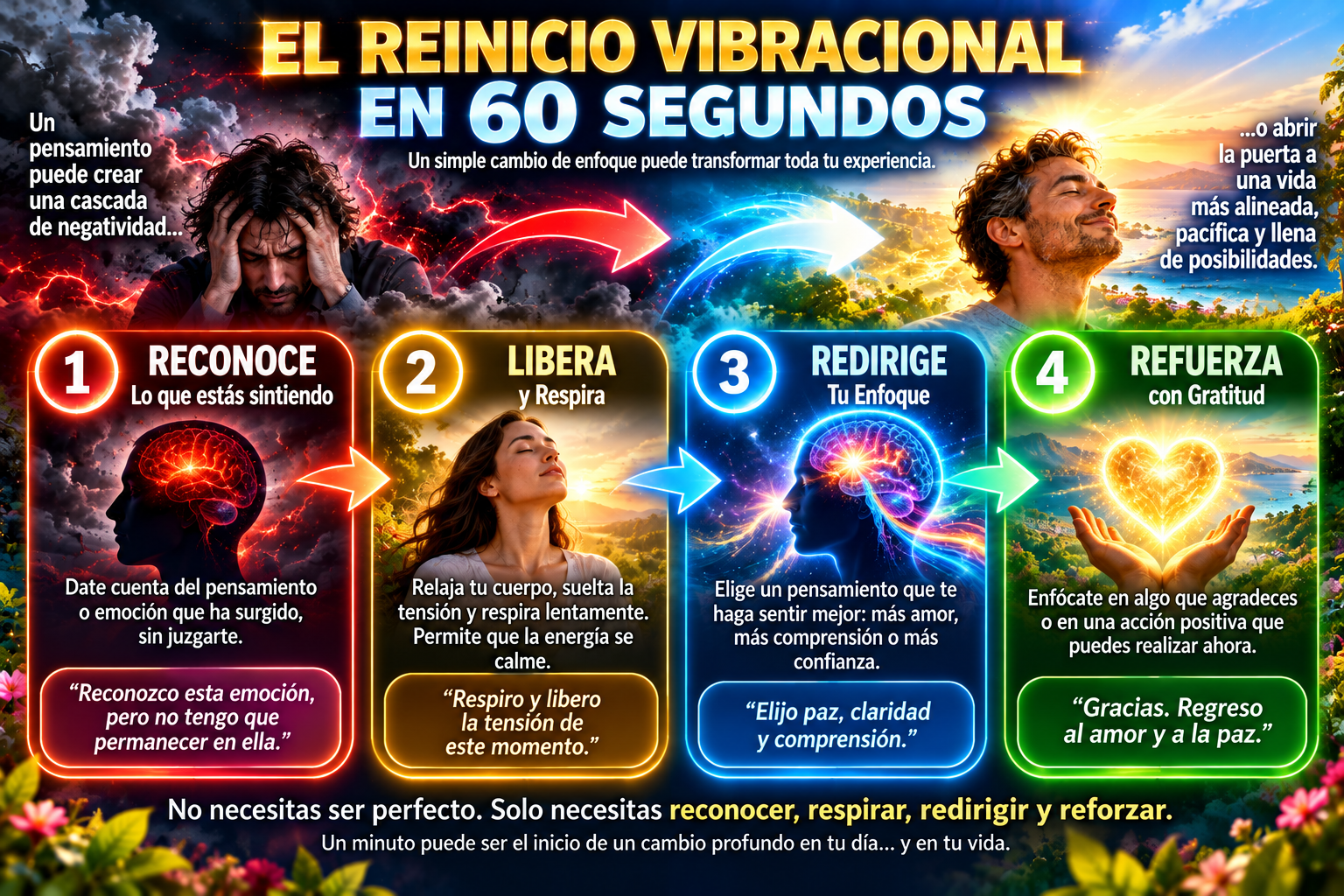
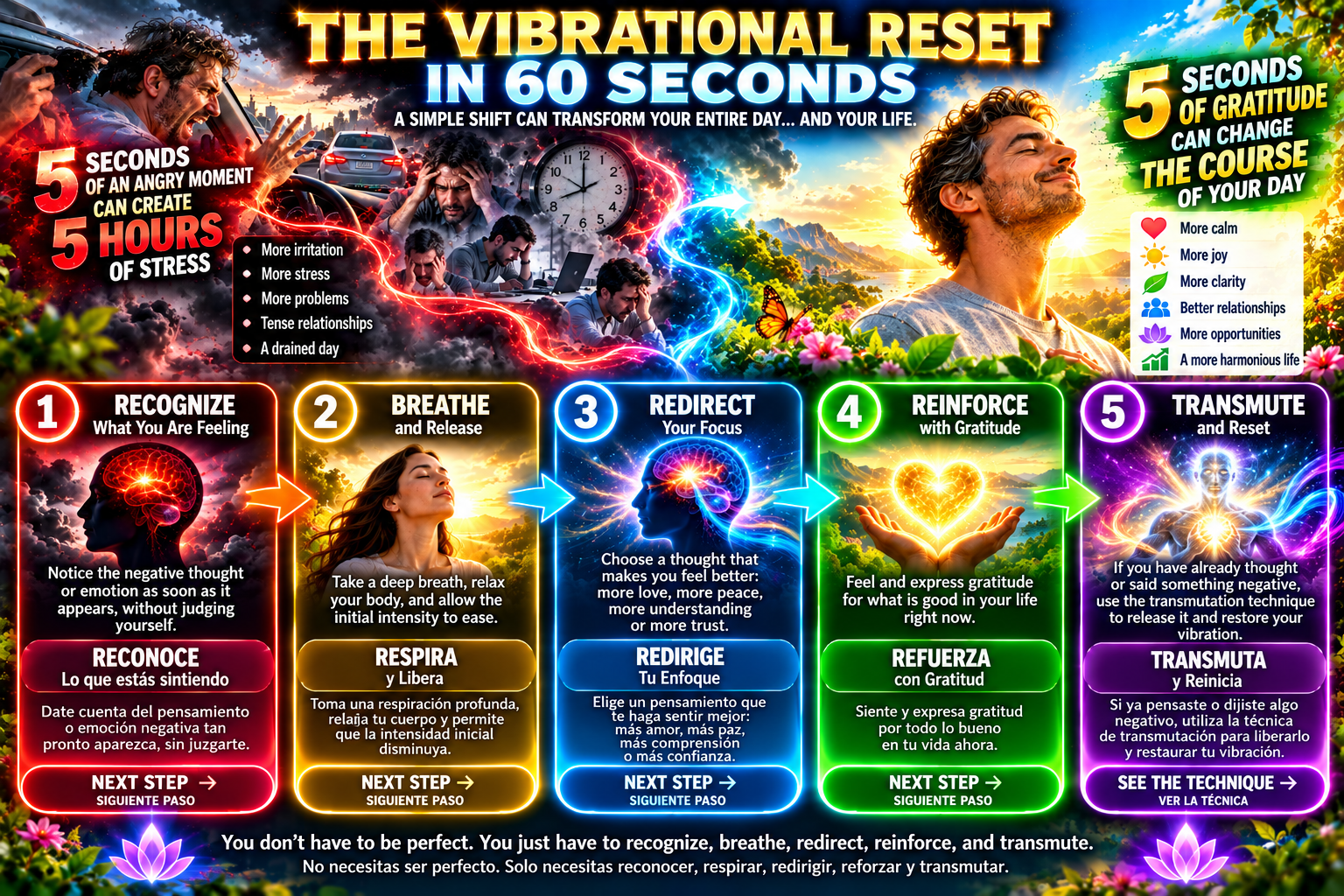
EL REINICIO VIBRACIONALTHE VIBRATIONAL RESET

Una práctica breve para reconocer, respirar, redirigir y reforzar. Incluimos también la transmutación para cuando ya expresaste pensamientos o palabras negativas.A short practice to recognize, breathe, redirect, and reinforce. We also include transmutation for when you have already expressed negative thoughts or words.

Gráfico de cuatro pasos del reinicio vibracionalInfographic of the five-step vibrational reset

Ilustraciones de referencia. La práctica interactiva completa, incluida la transmutación, aparece abajo.Illustrations for reference. The complete interactive practice, including transmutation, appears below.

01

RECONOCERECOGNIZE

Observa lo que estás sintiendo, sin juzgarte.

Notice what you are feeling without judging yourself.

“Reconozco esta emoción, pero no tengo que permanecer en ella.”“I recognize this emotion, but I do not have to remain in it.”

La idea de un reinicio en 60 segundos es una invitación a practicar, no una garantía de que todas las emociones desaparezcan en ese tiempo. Los umbrales de 17 y 68 segundos pertenecen a una enseñanza espiritual y no son reglas científicamente demostradas.The 60-second reset is an invitation to practice, not a guarantee that every emotion will disappear within a minute. The 17- and 68-second thresholds come from a spiritual teaching and are not scientifically established rules.

¿Y si ya lo pensaste o lo dijiste?What if you already thought it or said it?

No necesitas castigarte por un momento difícil. Puedes reconocerlo, elegir una respuesta nueva y reparar cualquier daño que hayas causado.You do not need to punish yourself for a difficult moment. You can acknowledge it, choose a new response, and repair any harm you may have caused.

✦ Afirmación de transmutación✦ Transmutation affirmation

«Reconozco los pensamientos, palabras y emociones negativas que he expresado. Ahora pido que toda esa energía sea transmutada en energía de Amor y Luz. Libero el enojo, el juicio y la carga emocional. Elijo la paz, la comprensión y el amor. Gracias. Gracias. Gracias.»“I recognize the negative thoughts, words, and emotions I have expressed. I now ask that this energy be transmuted into the energy of Love and Light. I release anger, judgment, and the emotional burden. I choose peace, understanding, and love. Thank you. Thank you. Thank you.”

La afirmación puede ayudarte a marcar un nuevo comienzo emocional. No borra lo ocurrido ni sustituye una disculpa, una conversación sincera o una acción reparadora.The affirmation can help mark a fresh emotional beginning. It does not erase what happened or replace an apology, an honest conversation, or a constructive action.

«No puedes cambiar las palabras que ya dijiste, pero sí puedes cambiar las palabras, pensamientos y acciones que vienen después.»“You cannot change the words you have already spoken, but you can change the words, thoughts, and actions that follow.”

El cambio comienza con una elecciónChange begins with a choice

No se trata de negar emociones ni de fingir alegría. Se trata de reconocer lo que sientes, responder con mayor conciencia y volver a intentarlo cuantas veces sea necesario.It is not about denying emotions or pretending to be happy. It is about recognizing what you feel, responding with greater awareness, and trying again whenever necessary.

Este material es una reflexión educativa y espiritual, no un tratamiento médico. La idea de que las emociones atraen sucesos externos mediante frecuencias específicas no está demostrada científicamente.This material is an educational and spiritual reflection, not medical treatment. The idea that emotions attract external events through specific frequencies is not scientifically established.